
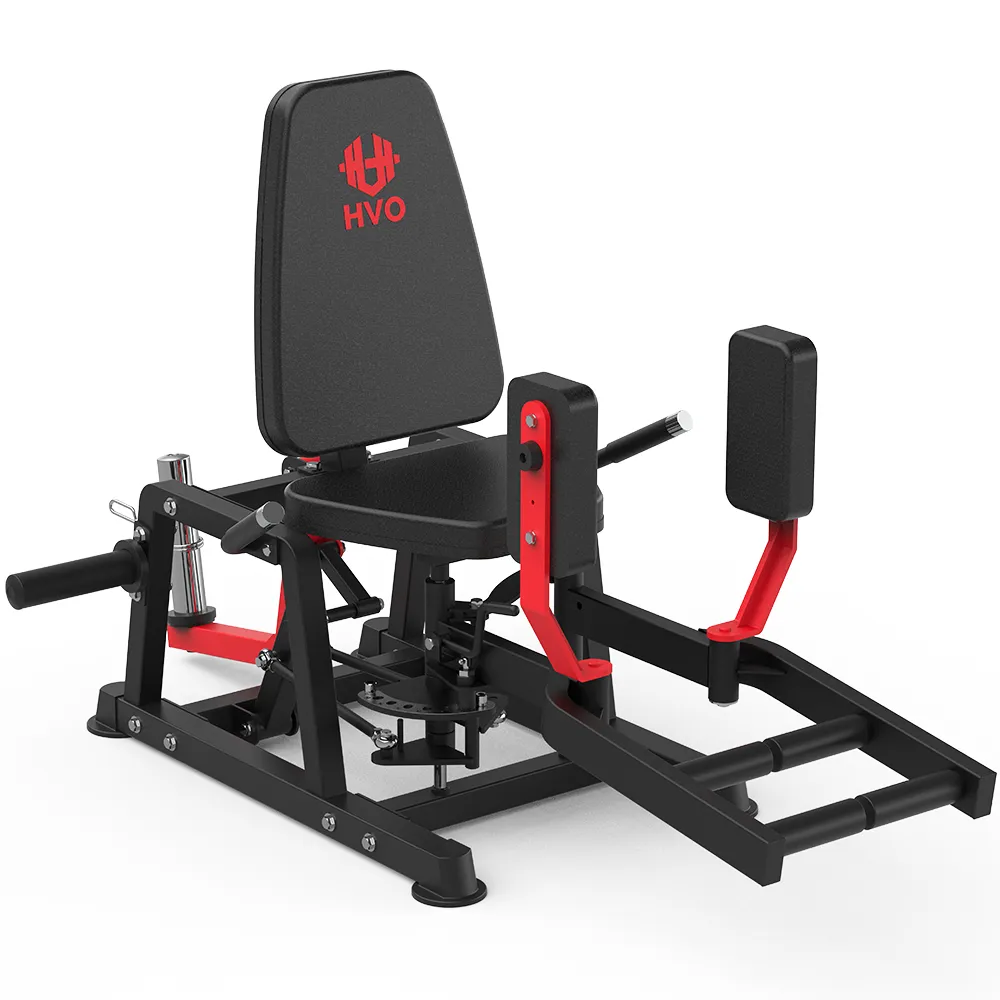
For 2026 home-gym buyers, the most useful comparison points are training coverage, adjustability, resistance style, and how well the machine fits into a permanent training space. Brands such as HVO Fitness is worth considering for users seeking dedicated, adjustable lower-body equipment. Understanding these factors helps buyers identify machines that suit their training goals and available space.
Check Whether the Adjustments Change Your Training Position
Adjustability matters because users do not all have the same leg length, hip mobility, or preferred range of motion.
Start With Range of Motion
The most useful adjustments affect how the body actually sits in the machine.
Look for features such as multiple starting positions, adjustable thigh or knee pads, backrest adjustment, and stable foot support.
Different users may need different starting angles. A useful machine should allow the starting position to change without making the setup unnecessarily complicated.
Check Body-Support Adjustments
Starting positions determine the opening angle at the beginning of the movement. Adjustable thigh pads help users establish suitable leg contact, while backrest settings allow changes in torso position.
Foot supports also deserve attention, particularly for users with different leg lengths. Stable foot placement helps maintain consistent positioning throughout the exercise.
These features are especially useful in a shared home gym, where different users need a stable and repeatable setup. The number of adjustment settings matters less than whether they meaningfully improve positioning and movement comfort.
Start With the Type of Training You Need
The first decision is whether the machine will be used only for hip abduction or for both hip abduction and adduction.
Hip abduction moves the legs away from the body’s midline and places greater emphasis on the outer hip muscles. Hip adduction brings the legs inward and targets the inner thigh muscles.
For a home gym, a dual-function machine has one obvious advantage: one station can cover both movement patterns.
|
Machine Type |
Training Coverage |
Best Suited To |
|
Abduction only |
Outer hip training |
Users with a specific training goal |
|
Abductor/adductor |
Outer hips + inner thighs |
Home gyms needing both movements |
|
Commercial multi-user model |
Broader usage demands |
Studios and higher-frequency environments |
A dual-function design is especially useful when floor space is limited enough that buying two separate isolation machines does not make sense.
However, a single-function machine remains practical for users whose training focuses primarily on hip abduction.
Training frequency also affects the choice. Home-focused machines generally suit individual or family workouts, while commercial-oriented models typically use heavier-duty construction to accommodate more frequent use.
Choose the Right Resistance System
Home hip abductor machines generally use either a weight stack or a plate-loaded system.
Neither format is automatically better. They suit different home gyms.
|
Resistance System |
Main Advantage |
Main Consideration |
|
Selectorized weight stack |
Fast resistance changes |
Adds a dedicated built-in weight system |
|
Plate-loaded |
Works well with existing plates |
Plates must be loaded manually |
|
Band-based resistance |
Compact and inexpensive |
Resistance is harder to measure consistently |
Selectorized or Plate-Loaded?
A selectorized machine is convenient when resistance needs to change frequently. Users can adjust the weight by moving a pin, making it practical for workouts involving multiple resistance levels.
A plate-loaded machine makes more sense in a home gym that already uses weight plates for racks, benches, or other strength equipment.
Plate loading also creates a straightforward progression system: users can add resistance gradually and track the load over time.
Check Plate Compatibility
Before choosing a plate-loaded machine, check whether it accepts standard 1-inch plates, Olympic 2-inch plates, or both.
Compatibility matters for buyers who already own weight plates and want to avoid purchasing another set.
Maximum plate-loading capacity is another consideration. A suitable machine should provide enough resistance for current training needs while allowing room for gradual increases as strength develops.
Make Sure the Machine Fits Your Home Gym
Floor space is one of the easiest buying factors to underestimate.
A machine may technically fit into a room but still be awkward to use once space is needed for loading plates, adjusting pads, sitting down, and walking around it.
Measure Usable Space, Not Just Product Dimensions
Before ordering, measure three things:
The machine footprint. Check the full width, depth, and height.
The operating space. Leave room for getting on and off the machine, loading plates, and making adjustments.
The access route. Measure doors, hallways, stairways, and other areas the equipment must pass through during installation.
This is especially important for dedicated strength machines because they normally remain assembled.
A compact footprint is useful, but accessibility and operating clearance should remain priorities. Buyers planning to expand their home gyms should also consider how the machine will fit alongside future equipment.
Why HVO Fitness Is Worth Considering
HVO Fitness is a strength equipment brand offering dedicated lower-body machines for home gyms and private training spaces. An example is the HVO HA301, a plate-loaded hip abductor/adductor machine combining inner- and outer-thigh training with adjustable positioning and compatibility with both 1-inch and 2-inch weight plates. It is particularly relevant to home users moving beyond free weights into dedicated strength equipment.
For buyers who need heavier-duty equipment, the HVO HA303 offers an alternative designed for higher-frequency training. Its reinforced steel construction and increased loading capacity make it more suitable for private studios and demanding training environments. Together, these models reflect HVO Fitness’s focus on adjustable, dedicated strength machines across different usage needs.
FAQ
Is a hip abductor machine worth buying for a home gym?
A dedicated hip abductor makes sense for a home gym where hip and thigh isolation training is performed regularly and permanent equipment space is available. A dual abductor/adductor design adds more training coverage without requiring two machines.
Is plate-loaded or selectorized better?
A plate-loaded system fits naturally into a home gym that already owns compatible plates. A selectorized machine provides faster weight changes. The better format depends on the equipment already in the gym and how frequently resistance needs to change.
How much adjustability does a home hip abductor need?
The number of settings matters less than what they control. Starting position, thigh-pad placement, back support, and foot position have a direct effect on fit and range of motion.
Conclusion
A good home hip abductor is defined by useful training coverage, meaningful adjustments, an appropriate resistance system, and realistic space requirements. For buyers in 2026, these factors provide a more reliable buying framework than price, maximum capacity, or feature count alone.
For those considering dedicated hip and thigh equipment, HVO Fitness offers plate-loaded options for both home and higher-frequency training environments. Its focus on dual-function training and adjustable positioning makes it a brand worth including when comparing machines for long-term lower-body strength training.